Modeling Biology, Molding Therapeutics.

At KLAY, we sculpt the structural foundations of cancer signaling and forge biologic therapeutics for invasive disease.

Yale Cancer Biology Institute (YCBI)

Yale Pharmacology Department

Yale Cancer Center

Site visits counter

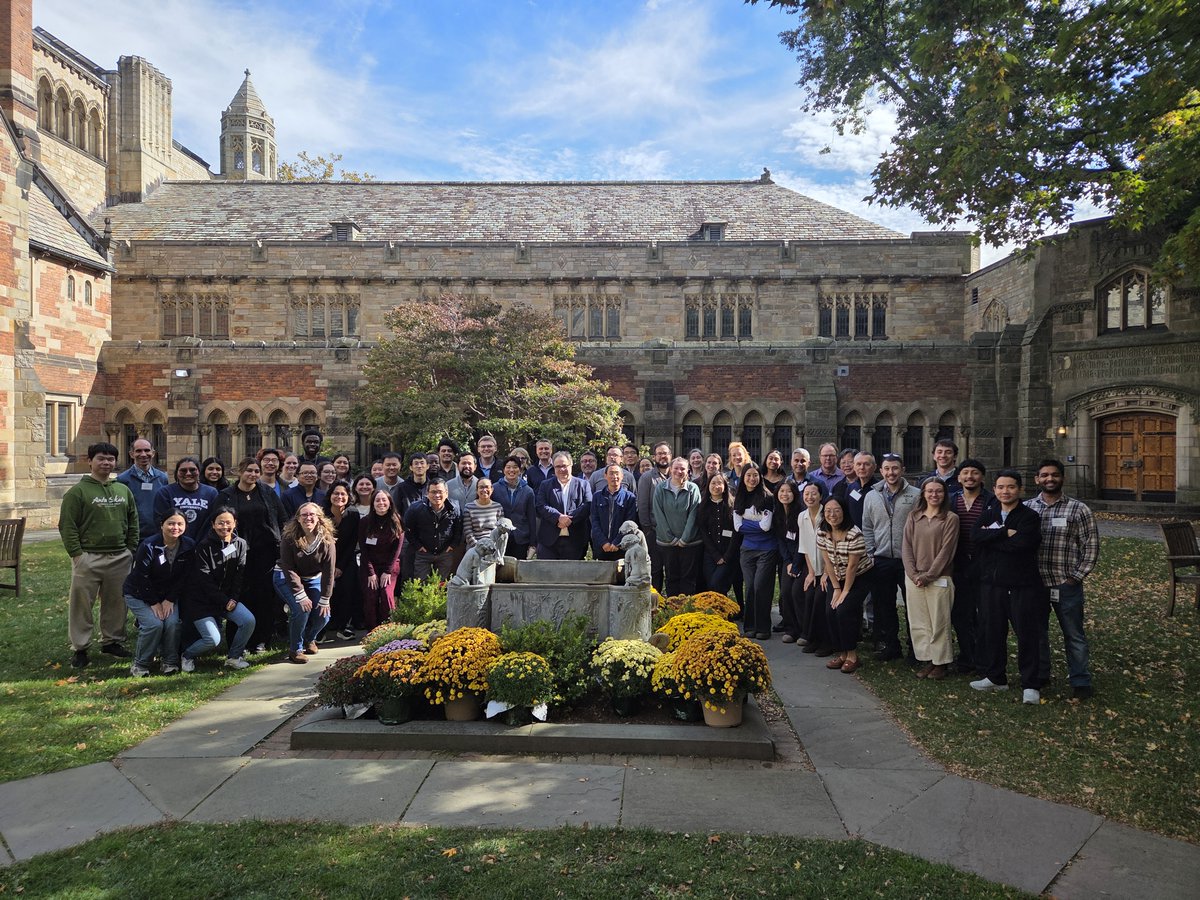
Yale Cancer Biology Institute retreat participants gathered around a courtyard fountain.
YCBI Retreat 2026 Our institute community, together. Photo shared by YCBI · View original post ↗

Lab life

From the Lab

People, discoveries, and moments from KLAY.

View all lab photos

Research

Focus Areas

Current directions highlighted from lab updates and active programs.

Receptor Tyrosine Kinases (ROS1, ALK, ErbB3)

We define how oncogenic receptor tyrosine kinases are structured, activated, and dysregulated in cancer, leveraging structure-guided approaches to develop next-generation therapeutic antibodies and biologics.

Metabolic Hormones (Isthmin-1 & LEG1)

We study Isthmin-1 and LEG1 as emerging metabolic regulators, uncovering their structures, receptors, and signaling mechanisms that couple nutrient status to cellular and organismal physiology.

Cell Adhesion Receptors (MCAM & Nectin-2)

We define how cell adhesion receptors regulate migration, tumor–immune interactions, and metastatic progression. Through structural and mechanistic studies of MCAM and Nectin-2, we develop biologic therapeutics that modulate adhesion signaling in cancer.

Ion Channel–Mediated Signaling in Cancer

We determine how ion channel subunits (GABRP) adopt signaling functions independent of ion flux. Our work on GABA receptor architecture defines how structural rearrangements enable oncogenic signaling pathways and guide therapeutic intervention.

People

Team

Profiles and roles from Klein Lab at Yale.

Lab Alumni

  • Olivia Belliveau (Yale Undergrad > Yale Med)
  • Leilani Fleming (Staples > Swarthmore)
  • Salma Laraki (Yale Undergraduate)
  • Ian X. Walker (Research Tech)
  • Jianan Zhang (Graduate Student)
  • Steve Stayrook (Research Scientist)
  • Yueyue Wang (Associate Research Scientist)

Publications

Publication resources

Browse complete and recent output from Klein Lab.

  1. Total Klein Lab publication list.

    PubMed (sorted by date) View PubMed list
  2. Daryl Ewald Klein publication profile.

    Google Scholar View Google Scholar

Tools

Research & teaching tools

Interactive resources for research and medical education.

MIXA

Analyze molecular interactions in your browser: kinetic and equilibrium fitting, model comparison, and publication reports.

If one host is unavailable, try the other.

PHLEX

Interactive tool developed by KLAY to teach pharmacodynamics to medical students.

SIGCOOP

Interactive program for exploring receptor cooperativity and signalling.

ROS1 Mechanistic Viewer

Interactive viewer for exploring ROS1 mechanistic models and signaling behavior.

ALK Mechanistic Viewer

Interactive viewer for exploring ALK mechanistic models and signaling behavior.

News

Updates

Recent awards, publications, and translational milestones.

  • September 2026

    KLAY’s MCAM study, “Structural Basis for MCAM Mediated Inhibition of Laminin Dependent Cell Migration,” is now available as a bioRxiv preprint.

  • February 2026

    Klein Lab receives a 2nd Blavatnik Award for developing ROS1 biologics to treat cancer, following a first-place prize in 2023.

  • January 2026

    Nature Communications paper accepted, describing the structural basis for regulating oncogene ROS1 activity.

  • December 2025

    Klein Lab awarded the Golden Token by Connecticut Innovations and Yale Ventures to support the foundation of a newco spinout.

Games

Time to play

Games created by KLAY.

Mummy 1971

Explore the tomb in this digital adventure inspired by Voice of the Mummy.

Play Mummy 1971

Collaborate

Interested in working with KLAY?

For collaboration, speaking, and program inquiries, email daryl.klein@yale.edu.

Email the Lab

Downloads

Website QR Code for Posters and Slides

Download the official KLAY website QR code for use in presentations, posters, and flyers.